Why an eSIM is the best way to get data in Vietnam
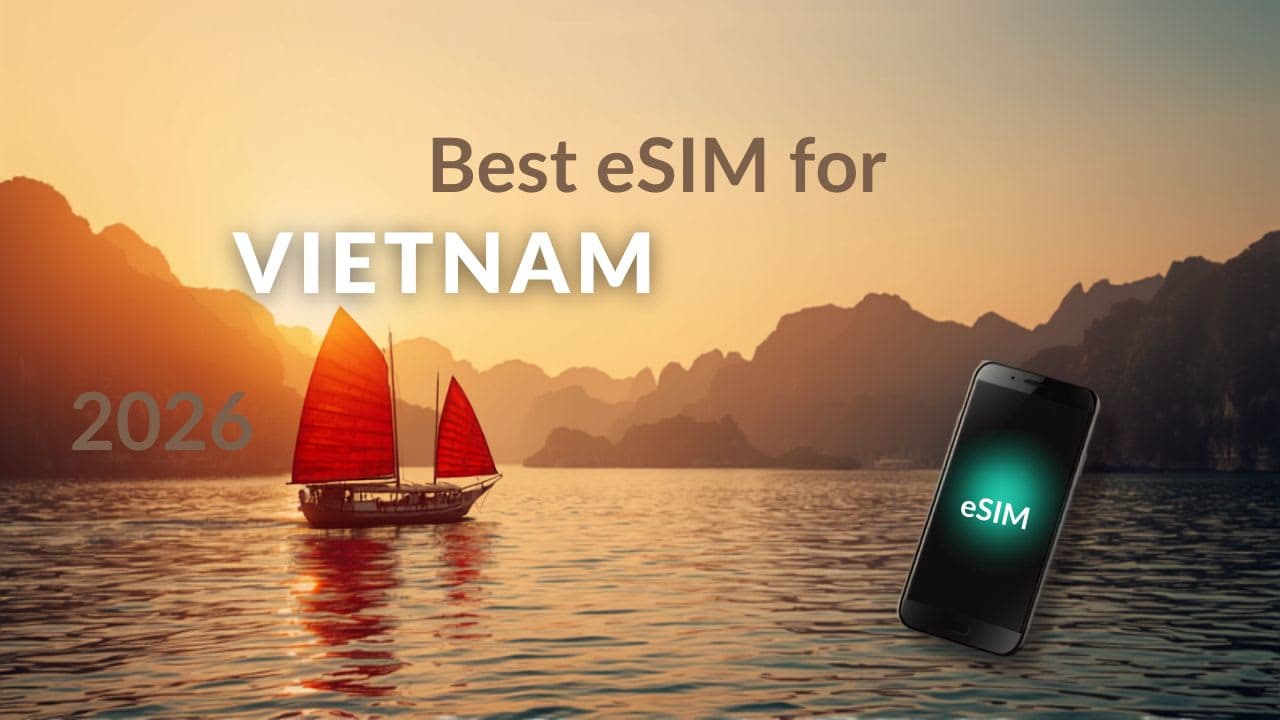
An eSIM is a digital SIM built into your phone. Instead of finding a kiosk, showing your passport, and swapping a tiny plastic card, you buy a plan online, scan a QR code, and you're connected. For a Vietnam trip that hops between cities, that convenience matters.
- Connected on arrival. Install before you fly and your data works the moment you land — no airport SIM counter.
- Keep your number. Your eSIM runs alongside your normal SIM, so you keep WhatsApp, calls, and texts on your home number.
- No roaming bill shock. You pay a fixed price up front instead of unpredictable roaming charges.
- Instant and paperless. No passport registration at a shop, no deposit, no card to lose between Hanoi and Saigon.
Vietnam mobile networks: who carries your data
Vietnam has three major networks: Viettel, Vinaphone, and MobiFone. Viettel is the largest carrier with the widest nationwide and 5G coverage; Vinaphone is strong across cities and suburbs; MobiFone performs well in urban centers. As of 2026, commercial 5G is live in Hanoi, Ho Chi Minh City, Da Nang, Hai Phong, and Can Tho, with 4G almost everywhere else.
Most travel eSIMs connect to one of these networks automatically — usually Viettel or Vinaphone for the best reach. When you buy through the Corelinx eSIM marketplace, your plan is provisioned on a reliable local partner network, so you don't have to compare carriers yourself.
How much eSIM data do you need for Vietnam?
Vietnam is data-hungry for travelers: Grab rides, Google Maps, Google Translate at markets, photos, and sharing it all. Here's a realistic guide:
- Light use (maps, messaging, occasional browsing): ~1 GB per 3–4 days.
- Average tourist (maps, Grab, social, photos, some streaming): ~5–8 GB per week, or ~1 GB/day.
- Heavy use / multi-week trip (hotspot, video calls, streaming, remote work): an unlimited-style or large daily plan.
For a classic 2–3 week north-to-south route, a generous or unlimited daily plan saves you topping up constantly. You can always add more in the app if you run low.
What to look for in a Vietnam eSIM
- Local coverage on Viettel or Vinaphone for the widest reach, including Sapa, the Mekong Delta, and central coast towns.
- Enough data for your route length, ideally with daily or top-up options.
- Hotspot/tethering allowed if you carry a laptop or share with a travel partner.
- Instant QR delivery so you can install before departure.
- Validity that covers your full trip (Vietnam trips often run 2–3 weeks).
- Real support — 24/7 help if activation ever hiccups.
Crossing into Cambodia, Laos, or Thailand on the same trip? Consider a regional Asia eSIM that covers multiple countries on one plan.
How to set up your Vietnam eSIM (step by step)
- Check compatibility. Most phones from iPhone XS, Google Pixel 3, and recent Samsung Galaxy models onward support eSIM.
- Buy your plan online before you travel and choose your data size and validity.
- Install the eSIM by scanning the QR code you receive — about 30 seconds.
- Leave it off until you land. Most plans start when you first connect to a Vietnamese network, so don't activate at home.
- Land and go. Turn on data roaming for the eSIM line and you're online the moment you arrive.
How to stay connected in Vietnam with Corelinx
Skip the airport SIM counter entirely. A Vietnam eSIM from Corelinx gives you instant activation, flexible data sizes, and 24/7 WhatsApp support if anything goes wrong. Install it before your flight and you'll land connected — ready to book your first Grab out of the airport and navigate straight to your hotel.
New users get up to 26% off with promo code COREFREE26. Browse the live plans, pick the data size that fits your route, and activate in minutes.
Quick FAQ
Does an eSIM work all over Vietnam?
Yes. On Viettel or Vinaphone you'll have strong coverage nationwide — cities, the coast, the Mekong Delta, and most of the north — with 5G in the major hubs and 4G almost everywhere else.
When does my Vietnam eSIM start?
Most plans activate when you first connect to a local network in Vietnam, not when you buy. So you can install before you fly and the clock only starts when you land.
Do I still need to register my passport like with a local SIM?
No. A travel eSIM skips the in-store passport registration that local prepaid SIMs require — you just scan a QR code.
Is an eSIM cheaper than roaming?
For most travelers, yes. A prepaid travel eSIM has a fixed price, so you avoid the surprise charges that come with standard international roaming.
Final word
For a Vietnam trip, an eSIM is the easiest, cheapest, and most reliable way to stay online — no counters, no roaming bills, no passport paperwork at a kiosk. Set it up before you fly and the only thing you'll think about when you land is your first bowl of phở.
Ready to go? Browse Corelinx eSIM plans for Vietnam and use code COREFREE26 for up to 26% off your first plan. New to eSIMs? See how it works or check the FAQ before you buy.