When is the best time to visit Bangkok?
Bangkok has three broad seasons, and timing makes a real difference to your trip:
- Cool, dry season (November–February): the most comfortable months, with lower humidity and pleasant evenings. This is peak tourist season, so book ahead.
- Hot season (March–May): seriously hot, often topping 35°C, with the Songkran water festival in April as a major highlight.
- Rainy season (June–October): warm with short, heavy downpours rather than all-day rain. Fewer crowds and lower prices make it underrated for budget travelers.
For your first visit, aim for the cool season if you can — it's the easiest weather for temple-hopping and walking.
How many days do you need in Bangkok?
Three to four days is ideal for a first trip. That's enough to see the headline temples, explore a couple of neighborhoods, eat your way through a night market, and still have time for a river trip or a day excursion. If Bangkok is your gateway to the rest of Thailand, even two full days will cover the essentials before you fly south to the islands or north to Chiang Mai.
Where to stay: choosing the right area
Bangkok is huge, so staying near the BTS Skytrain or MRT metro is the single best decision you can make. Top areas for first-timers:
- Sukhumvit: modern, central, and packed with restaurants, malls, and nightlife, all along the BTS line. The easiest base for first-timers.
- Silom & Sathorn: the business district by day and a lively dining-and-nightlife zone by night, well connected by BTS and MRT.
- Riverside (Charoen Krung): atmospheric and scenic, home to grand hotels and close to historic temples and Chinatown.
- Khao San & the Old City (Rattanakosin): backpacker central and within walking distance of the Grand Palace, though a little further from the train network.
Things to do in Bangkok: the first-timer essentials
Temples & landmarks
- The Grand Palace and Wat Phra Kaew (Temple of the Emerald Buddha) — Bangkok's must-see; dress modestly with shoulders and knees covered.
- Wat Pho — home to the giant Reclining Buddha and the spiritual home of Thai massage.
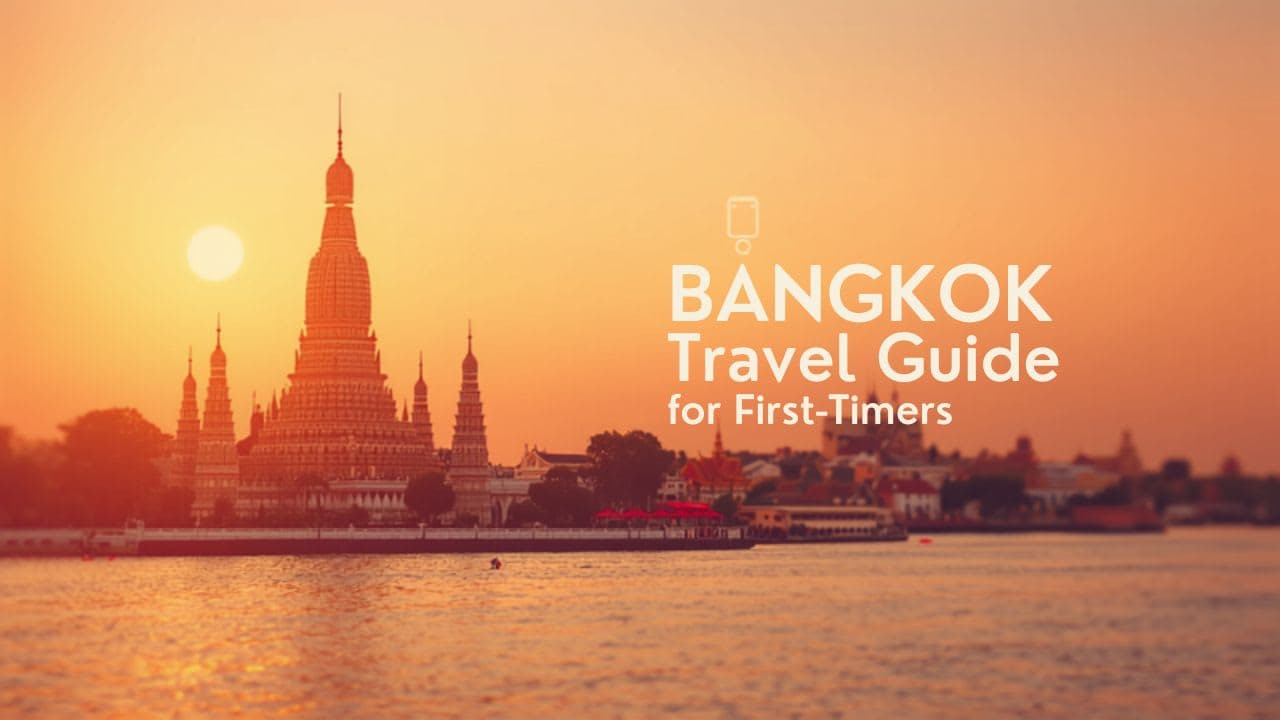
- Wat Arun — the riverside "Temple of Dawn," stunning at sunset from across the water.
Markets & food
- Chatuchak Weekend Market — one of the world's largest markets, with thousands of stalls.
- Yaowarat (Chinatown) — legendary evening street food; come hungry.
- A rooftop bar — Bangkok's skyline views are a rite of passage after dark.
River & culture
- A Chao Phraya river boat or canal (khlong) tour to see the city from the water.
- The Jim Thompson House for a calm dose of art and traditional architecture.
Getting around Bangkok
Bangkok's traffic is famous, so use the rail network whenever you can:
- BTS Skytrain & MRT metro: fast, cheap, air-conditioned, and the best way to beat the traffic.
- Chao Phraya river boats: a scenic and efficient way to reach riverside temples.
- Grab: the dominant ride-hailing app — easier and more transparent than haggling. You'll need mobile data to use it.
- Taxis & tuk-tuks: insist on the meter in taxis, and agree the fare before riding a tuk-tuk.
- From the airport: from Suvarnabhumi (BKK), the Airport Rail Link reaches the city in about 30 minutes and connects to the BTS/MRT; Don Mueang (DMK) serves most budget flights with bus and train links.
Money: the Thai baht and smart spending
Thailand uses the Thai baht (THB). A few tips keep your budget healthy:
- Thai ATMs charge a foreign-card withdrawal fee (commonly around 220 THB), so withdraw larger amounts less often.
- Always choose to be charged in baht, not your home currency, when an ATM or card machine offers conversion.
- Cards are widely accepted in malls, hotels, and bigger restaurants, but carry cash for street food, markets, and tuk-tuks.
- Tipping isn't mandatory, but rounding up or leaving small change is appreciated.
Entry essentials: visas and the arrival card
Two things to sort before you fly:
- Visa rules are changing. Many nationalities have enjoyed visa-free entry for tourism, but Thailand approved a revised exemption scheme in 2026 that shortens the visa-free stay for many countries. Always check the current allowance for your passport before you travel.
- The Thailand Digital Arrival Card (TDAC) is mandatory. Since replacing the old paper form, every foreign visitor must complete the free online TDAC within 72 hours before arrival at the official immigration portal. Do it before you fly to skip stress at the airport.
You may also hear about a proposed 300-baht tourist fee; as of mid-2026 it has not yet taken effect, and plans suggest it would be bundled into airfares for air arrivals.
How to stay connected in Bangkok
Almost everything above runs on data: Grab, Google Maps, river-boat schedules, restaurant bookings, translation, and even completing your TDAC if you didn't do it before flying. You'll want to be online the moment you land, not hunting for airport Wi-Fi.
The easiest fix is an eSIM. A Thailand eSIM from Corelinx installs in about 30 seconds, activates the moment you connect in Thailand, and runs alongside your home number so you keep WhatsApp and calls. Coverage is strong across all three Thai networks — AIS, TrueMove H, and dtac — with 5G in Bangkok and other major cities. New users get up to 26% off with promo code COREFREE26.
Set it up before you fly and you'll step off the plane already connected — ready to book a Grab and find your hotel.
Quick FAQ
Do I need a visa for Bangkok?
Many nationalities can enter visa-free for tourism, but Thailand revised its visa-exemption scheme in 2026 to shorten the stay for several countries. Check the latest rule for your passport, and remember the Thailand Digital Arrival Card (TDAC) is required for everyone.
Is Bangkok cheap for travelers?
Yes — Bangkok is excellent value. Street food, public transport, and local experiences cost little, though imported drinks and high-end hotels can add up. It's easy to travel here on almost any budget.
Is Bangkok safe for first-timers?
Bangkok is generally very safe for tourists. The main things to watch are common scams (overpriced tuk-tuks and "the temple is closed today" tricks) and traffic. Use Grab and metered taxis and you'll avoid most issues.
What's the best way to get from the airport into the city?
From Suvarnabhumi, the Airport Rail Link is fast and cheap and links to the BTS/MRT. For door-to-door convenience, order a Grab — which means having mobile data ready when you land.
Final word
Bangkok rewards curiosity. Pick a base near the Skytrain, balance temples with street food, take to the river at least once, and don't over-plan — some of the best moments happen between the sights. It's also the perfect launchpad for the rest of Thailand.
Before you fly, set up your Corelinx eSIM with code COREFREE26 for up to 26% off, then keep planning with our Phuket travel guide and Chiang Mai travel guide for the rest of your trip.